ads
Showing posts with label Mesothelioma. Show all posts

Mesothelioma Stages

Written By Ramadhan Fnw on Sep 7, 2011 | 4:14 PM

How is mesothelioma staged?
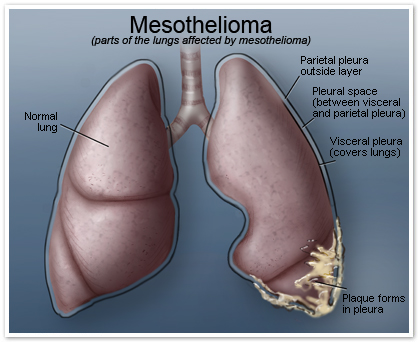
  Mesothelioma stages are the categorisation levels that doctors utilise to resolve the extent of the mortal within the body. Mesothelioma is unreal between 1 and 4, depending on inclemency. Initiate 1 mesothelioma, for example, is highly local disease, with the tumour affecting only a modest extent and office tissue. Travelling 4 mortal, on the separate extreme, is voluminous disease, which has dispersion far beyond the tumor's beginning, affecting other periodical tissue and yet murder or ivory cells.

Precondition how rarified mesothelioma is, a buckram staging sorting exists only for pleural mesothelioma, which affects the covering of the lung and bureau cavum. System is discovered at identification, using any classify of characteristic procedures. Elementary production can be driven finished the use of imagery scans, which testament furnish sign specialists a visible histrionics of the extent of the malignancy within the body. If the results of picturing scans are undetermined or it appears that the disease is not local, a physician may postulation the patient to support a plague or operative biopsy, which can ascertain if the malignant cells have metastasized to the slaying or lymph nodes finished region investigating.

Mesothelioma System Systems
Today, there are triad pinion system systems misused to determine how far mesothelioma mortal has overspread and apiece method uses quaternary stages to expound the advance of the disease. It is the definition of apiece platform within the various systems that can variegate slightly.

Butchart Production Group
The Butchart production method is the oldest and most commonly utilized production method for mesothelioma. This grouping is focussed on defining the activity of the essential tumor assemblage in the embody for apiece arrange. The grouping doesn't writing how some someone cells are give, how big the malignancy is or the plane of crab nowadays in the embody overall.

TNM System Scheme
The TNM Staging Group, formed by the Dweller Spliff Committee on Someone (AJCC), is akin to production systems utilized for otherwise types of house. It considers the characteristics of the neoplasm (T), whether or not lymph nodes are implicated (N) and if the mansion has metastasized to separate locations in the body (M).

Brigham Production System
The Brigham Staging Grouping also has tetrad stages of move and is very related to the TNM System Scheme. The primary difference between the two is that in gain to process the activity of the malignance, and assessing lymph node status and the presence of metastatic disease, the Brigham Grouping also helps assess the choice for and effectiveness of postoperative involvement at apiece travel.

The Stages of Mesothelioma
The foursome stages of mesothelioma, as noted above, vary slightly within each scheme but can be mostly defined as indicated below. Please utter into the individualist pages to get more assemblage nearly apiece travelling in pandemic and as is it circumscribed within each system system:

Travelling 1 Mesothelioma
In Initiate 1 the angiopathy is localized, there is no lymph knob condition and the constellation has not locomote to opposite meat or tissues. In this occurrence, the mansion is liable classified to one indorse of the pleura and operative removal is contingent

Stage 2 Mesothelioma
In Platform 2, the malignance is larger and has invaded the lung or diaphragm. Lymph nodes may also be embroiled. In this framework, preoperative resection may be realizable tho' the soul has promising travel to both sides of the pleura.

Represent 3 Mesothelioma
In Coach 3, mesothelioma has invaded a singular region or region specified as the bureau wall, gullet, lymph nodes and preoperative resection is mostly ruled out as an effective handling.

Initiate 4 Mesothelioma
In Pioneer 4, mesothelioma has invaded eightfold regions specified as diverse areas of the bureau surround, the stop and/or the pericardium. Lymph glands are also active and the human has locomote to different meat. Surgical removal provides no consider in this circumstance as the disease has belike metastasized fortunate beyond its origination.
Sumberku: disini

Mesothelioma Cancer

Written By Ramadhan Fnw on Aug 29, 2011 | 1:20 AM

Mesothelioma Cancer
Making a correct mesothelioma diagnosis is particularly difficult for doctors because the disease often presents with symptoms that mimic other common ailments. There is no known cure for mesothelioma, but treatments such as surgery and chemotherapy have helped to improve the typical mesothelioma prognosis.
Pleural mesothelioma (affecting the lung’s protective lining in the chest cavity) represents about three quarters of all mesothelioma incidence. Peritoneal mesothelioma which affects the abdominal cavity and pericardial mesothelioma, which affects the cardiac cavity, comprise the remainder. Testicular mesothelioma is extremely rare and is typically presents with metastases of the peritoneal variety. There are three recognized mesothelioma cell-types. Between 50 and 70% of all mesotheliomas are of the epithelial variety. While prognosis is generally poor, it is considered less aggressive than sarcomatoid mesothelioma and biphasic mesothelioma, which comprise the remainder of cell type diagnoses.
The cavities within the body encompassing the chest, abdomen, and heart are surround by a membrane of cells known as the mesothelium. Mesothelial cells assist in general organ functions. The mesothelium is particularly important to organs that are commonly in motion, such as expansion or contraction of the lungs, stomach, or heart. Lubrication from the mesothelial cells allows free range of motion within the body. The mesothelium of the chest, abdomen, and cardiac cavity are called the pleura, the peritoneum, and the pericardium, respectively. Each of these groupings of mesothelial cells are extremely critical to the functions of the body structures which they encompass.
Malignancies (cancerous tumors) occurring within the mesothelial membranes are known as malignant mesothelioma, or simply mesothelioma. Benign tumors of the mesothelium are known to occur, but are much rarer than the more common malignant cancer.
While tumors of the mesothelium were first recognized in the late 18th century, it was not until the middle of the 20th century that this particular cancer was studied and examined with more detail. It was at this time where suspicions of the cancer’s causal relationship with asbestos exposure became more substantiated. A joint research venture through the Department of Thoracic Surgery at the University of the Witswater and/Johannesburg General Hospital in South Africa provided the most compelling evidence of the nexus between asbestos exposure and the development of pleural mesothelioma.
Incidence of mesothelioma is still quite rare, with only 2,500-3000 diagnoses in the United States each year. There was a spike in reported diagnoses between 1970 and 1984, which has been attributed to the latency period between diagnosis and the height of industrial exposures, which occurred roughly 40-60 years prior to this time. Exposure was common in nearly all industries but was particularly common in the WWII-era military industrial cycle, including Navy Shipyards.
Although this cancer is much more common in men over the age of 60 (largely attributed to the industrial exposures within male-dominated industries), mesothelioma in women and children has been described as well. Mesothelioma causes for diagnosis in women and children are mainly attributed to secondary exposure to asbestos, as it was not uncommon for men to bring asbestos back into the home on their body or clothing if proper cleaning facilities were not available on site.
Mesothelioma is diagnosed through a comprehensive combination of biopsy and imaging scans.
Mesothelioma can be a difficult malignancy to diagnose because the symptoms and pathology of the disease closely resemble other respiratory conditions. For this reason, misdiagnosis is not uncommon in mesothelioma patients. Symptoms of mesothelioma include chest pain, chronic cough, effusions of the chest and abdomen, and the presence of blood in lung fluid.
Diagnostic surgeries, including a biopsy, will typically be required to determine the type of malignant cells that are present in the body. Typically a body imaging scan, including a magnetic resonance image (MRI) or computer topography (CT scan) will be required to determine the extent and location of the disease.
Mesothelioma patients are generally referred by their personal physicians to one of the many renowned mesothelioma doctors in the United States. These oncologists are well versed in the disease behavior and pathology and are the most familiar with cutting-edge mesothelioma treatment options. Dr. David Sugarbaker of the Brigham and Women's Hospital, an extension of Harvard University and the Dana Farber Cancer Institute in Boston, MA, is at the forefront of mesothelioma treatment through the International Mesothelioma Program.
While mesothelioma is typically advanced at diagnosis, treatment options are available.
Mesothelioma, while certainly an aggressive disease, is a manageable malignancy. While there is no cure for the cancer, mesothelioma treatment options including surgery, chemotherapy, and radiation therapy are available for many patients. While a combination of Alimta® and Cisplatin is currently the only FDA approved chemotherapy regimen, several clinical trials are currently in progress utilizing other drugs including Gemcitabine and Onconase, with many showing dramatically improved results in certain cancer patients.
Radiation therapy is also utilized, but typically in conjunction with other treatment methods like surgery and chemotherapy. Surgical resection of mesothelioma is possible in early-stage-diagnosed patients. Aggressive surgeries such as extrapleural pneumonectomy can extend survival rates far beyond previously-thought timeframes. Diagnostic and palliative surgeries such as pleurocentesis and pleurodesis are also common in patients of malignant mesothelioma cancer.
Alternative therapies have also been used effectively by many mesothelioma patients to assist in managing symptoms of the disease and conventional treatments. These treatments are mainly preferential but can be extremely valuable to many patients.
Mesothelioma is caused by exposure to asbestos.
Mesothelioma is only caused by exposure to asbestos, though cases have been documented in children or other individuals with no asbestos history. Asbestos is a microscopic and naturally-occurring mineral that lodges in the pleural lining of the lungs and the peritoneal lining of the abdominal cavity. In most cases, several years will pass (up to 60) before mesothelioma develops in those who had been exposed to asbestos.
In many cases, those individuals diagnosed with mesothelioma that have been known to be exposed to asbestos may be eligible for financial compensation from asbestos manufacturers for their illness. Those who have been diagnosed with mesothelioma and were exposed to asbestos should fill out the brief form on this page. We'll rush you a complimentary mesothelioma and asbestos exposure information kit detailing new mesothelioma treatments, active clinical trials, top doctors, as well as how to obtain compensation for asbestos-related health conditions like mesothelioma.
Topics in this Section

Mesothelioma Risk Factors
Asbestos exposure is the primary risk factor for mesothelioma. Others include Radiation, Zeolite and SV40. Read more in this section.

Mesothelioma Causes
The primary cause of mesothelioma is asbestos exposure. Learn more about direct occupational exposure as well as second hand exposure.

Mesothelioma Symptoms
Mesothelioma symptoms often mimic those of common respiratory ailments. Learn more about the signs and symptoms to be aware of.

Mesothelioma Diagnosis
Read about the diagnostic tests that doctors use to determine whether or not a patient has mesothelioma including imaging scans and biopsies.

Mesothelioma Types
Pleural mesothelioma, peritoneal mesothelioma and pericardial mesothelioma are the most common types of mesothelioma. Learn more.

Mesothelioma Stages
Learn about the different staging systems that medical experts use find out how far mesothelioma cancer has spread.

Mesothelioma Prognosis
Learn about the various factors that determine what the prognosis is for individuals that have been diagnosed with mesothelioma.

Mesothelioma Information
This section provides a wealth of information about mesothelioma including the disease itself, latency period, survival rates, prevention and more.

Mesothelioma Pictures
This section provides visual depictions of the types of mesothelioma that patients are most often diagnosed with, available treatment options, and the dangers associated with asbestos exposure.

Mesothelioma Charities
These organizations support the mesothelioma community through a variety of programs that serve to raise awareness, fund ongoing research and assist asbestos disease victims in their fight against cancer.
Sources:
National Cancer Institute – Malignant Mesothelioma
(http://www.cancer.gov/cancertopics/types/malignantmesothelioma)
Wagner, J.C., Sleggs, C.A., and Marchand, Paul. “Diffuse Pleural Mesothelioma and Asbestos Exposure in the North Western Cape Province.” Department of Thoracic Surgery: University of The Witswatersrand. Johannesburg, South Africa. 1960.
Grondin, Sean C., Sugarbaker, David J. “Pleuropneumonectomy in the Treatment of Malignant Pleural Mesothelioma” Chest December 1999 116:suppl 3 450S-454S;
Rusch, Valerie W. “Indications for pneumoctomy. Extrapleural pneumonectomy”
Roggli VL, Sharma A, Butnor KJ, Sporn T, Vollmer RT (2002). "Malignant mesothelioma and occupational exposure to asbestos: a clinicopathological correlation of 1445 cases". Ultrastruct Pathol 26(2): 55–65.
Brigham and Women’s Hospital – International Mesothelioma Program
(http://www.brighamandwomens.org/Departments_and_Services/surgery/services/thoracicsurgery/services/mesothelioma/default.aspx

Mesothelioma Treatment

Written By Ramadhan Fnw on Aug 27, 2011 | 11:42 PM

Mesothelioma Treatment

If there’s one thing we know about mesothelioma treatment, it’s this: we’re still being challenged to arrive at efficacy.
Despite years of research since the disease was first identified, it’s still difficult to identify the best approach to treating the disease, says David Rice, MD, a cardiothoracic surgeon and nationally known mesothelioma expert who practices at the University of Texas MD Anderson Cancer Center in Houston, TX.
The very rareness of the cancer—only about 3,000 people a year are diagnosed in the United States—makes it difficult to run the kind of research studies needed to compare treatments and determine the ideal therapy at each stage of the disease. “There isn’t a lot of evidence-based science in this disease,” Dr. Rice admits. So when his patients ask him what the best treatment is for the disease, he tells them what we tell you in this section, adding that “we don’t have a reliable cure for this disease.”
Thus, a major goal of treatment is to reduce pain and suffering and prolong a patient’s life as long as possible while providing them with the highest quality of life possible.
Choosing the right mesothelioma doctor is an important first step in planning for treatment.
There are a number of mesothelioma experts, like Dr. Rice, practicing in specialized clinics throughout the country. Each of these cancer specialists has an acute knowledge of the behavior and pathology of malignant mesothelioma and its treatment. It is likely that if you are diagnosed with mesothelioma, you will be referred by your personal physician to a larger scale comprehensive cancer center.
The most important consideration in mesothelioma treatment is the cancer stage and type, said Dr. Rice. Treatment decisions also depend on whether the cancer is localized to the chest or has spread to the chest wall, diaphragm, or lymph nodes, your age and overall health, and the center where you’re being treated. Learn more about finding a doctor here.
Conventional treatments for mesothelioma involve surgery, chemotherapy, and radiation therapy.
As with most solid tumors, doctors turn to surgery, radiation and chemotherapy to manage mesothelioma. When exploring the various treatment options available with your doctor it is important to be informed about the risk and benefits of each one before making a final decision.

Surgery

Only about 1 in 5 patients with metastatic pleural mesothelioma undergo surgery. There are two main surgeries: pleurectomy/decortication, in which the surgeon tries to remove as much of the tumor from around the lung as possible, and the more radical extrapleural pneumonectomy, in which the lung itself is removed.
There is a lot of debate as to which is “best,” said Dr. Rice, although studies find that most long-term survivors have had surgery. He personally believes that pneumonectomy is best for tumor control if followed with radiation. Studies find it prevents tumor recurrence in the chest in 80 to 85 percent of patients who have the surgery.
However, Dr. Rice noted, it is a long, intensive operation with a 55 percent complication rate and a 3 percent risk of death, higher in some institutions. “So you only want to perform that surgery if the patient has a reasonably good prognosis,” said Dr. Rice. Translation: it doesn’t appear that the cancer has spread outside the chest.
Patients best suited for pneumonectomy are younger, with the epithelial form of the disease, no obvious lymph gland involvement, and are otherwise healthy enough to withstand the rigor of the procedure. Dr. Rice actually waits until he has the patient’s chest open in the operating room and biopsies the lymph nodes before deciding which procedure to perform.
Pleurectomy/decortication has a higher failure rate, with the tumor recurring in the chest cavity 50 to 80 percent of the time. However, that rate may change with improved radiotherapy techniques, Dr. Rice said. The reason for the high recurrence is that it’s impossible to completely remove the tumor without removing the lung.
However, he noted, there is no difference in survival rates between the two surgeries. Part of the reason is that the cancer has often spread to other parts of the body by the time it is diagnosed even if it appears to be confined to the chest.

Chemotherapy

Chemotherapy, also known as systemic therapy, uses oral or infusion-based medications to kill cancer cells throughout your body. Chemotherapy is used both before and after surgery, as well as in people who can’t handle surgery. It is also used in the palliative setting to reduce pain and improve quality of life.
The most commonly used chemotherapy drugs for mesothelioma are cisplatin combined with pemetrexed (Alimta) or raltitrexed (Tomudex). Other combinations include gemcitabine, carboplatin or oxaliplatin.
If you can’t manage combination therapy, your doctor may start on just one drug. Sometimes, your doctor may infuse the medication directly into your chest cavity, a procedure called pleural chemotherapy, or, abdomen, called intraperitoneal chemotherapy. You may also get a second course of chemotherapy, called “second-line” chemotherapy, with pemetrexed or other drugs, raltitrexed plus oxaliplatin, or the triple drug combination of irinotecan, cisplatin and mitomycin.
Some centers are beginning to provide intraperitoneal chemotherapy before surgery, followed by chemotherapy shortly after surgery. You can learn more about this approach here. There is also work underway to personalize chemotherapy based on the genetic characteristics of your tumor.

Radiation

Radiation can be an important part of mesothelioma treatment. The problem is that because the cancer is near the heart and lungs, it’s challenging to provide the kind of high-dose, intensive therapy needed to shrink the tumor. However, a newer option, intensity-modulated radiotherapy (IMRT), which can more accurately target cancer cells and avoid healthy tissue, may provide better results when performed by experienced clinicians.
Investigational therapies are being explored through clinical and surgical trials at many of the nation’s top cancer centers.
There are more than 50 studies on new therapies for mesothelioma in the U.S. that are looking for volunteers. Researchers are investigating new targeted drugs and chemotherapies, as well as new protocols for giving the medications; immunotherapy, which harnesses the power of the immune system to fight the disease; phototherapy, in which you are injected with a drug that bonds to cancer cells and is activated by high-intensity light; genetic therapies; and novel radiotherapy techniques like tomotherapy to treat the disease. Learn more about participating in a clinical trial here.
At some point, the management of the disease will shift from trying to cure the disease to trying to keep the patient as comfortable as possible for as long as possible.
This is the palliative care stage, when many people enter a hospice program. The primary goal at this stage is maximizing patient comfort. Medication to help with pain, difficulty breathing, and other symptoms that may be experienced is a mainstay. So is emotional and spiritual support for you and your family.
Alternative therapies for mesothelioma can be used to ease side effects of traditional cancer treatment.
Complementary and alternative medicine (CAM) includes such therapies as massage, acupuncture, and meditation. They can be a powerful part of your overall management plan, helping you better manage the stress and anxiety of the disease and conventional treatments.

Topics in this Section

Conventional Therapies
Conventional therapies for mesothelioma include surgery, radiation and chemotherapy.

Experimental Therapies
Several forms of mesothelioma treatment such gene therapy, immunotherapy, photodynamic therapy and multimodality therapy are still in their preliminary stages.

Alternative Treatments
These untraditional treatment approaches can complement conventional therapies and allow the patient to be more at peace and comfortable during this difficult time.

Treatment by Stage
This section lists typical treatment strategies based on the stage of the mesothelioma.

Mesothelioma Doctors
Medical doctors who specialize in aggressively treating mesothelioma cancer state by state.

Mesothelioma Experts
Medical doctors with a longstanding expertise in treating malignant mesothelioma.

Clinical Trials
Information about current studies of promising new or experimental mesothelioma treatments.

Mesothelioma Clinics
Top Cancer Centers for mesothelioma treatment have been listed alphabetically by state for your convenience.

Ask Your Doctor
We have listed some questions that you might want to ask your doctor in this section.

Treatment Side Effects
While undergoing treatment for mesothelioma, you should be prepared for the following treatment side effects.

Caregiver Resources
Resources for family members and loved ones responsible for caring for mesothelioma patients.

Mesothelioma Research
Selected abstracts relating to malignant mesothelioma from PubMed, the National Library of Medicine's search service.

Mesothelioma Treatment Alerts

Articles regarding the most recent advances in mesothelioma treatment that are helping to improve longevity and quality of life in patients.
Sources:
Campbell NP, Kindler HL. Update on malignant pleural mesothelioma. Semin Respir Crit Care Med. 2011;32(1):102-110.
Sugarbaker, David, Zellos, Lambros S. Multimodality treatment of diffuse malignant pleural mesothelioma. Seminars in Onology. 2002; 29 (1): 41-50.
Chua TC, Yan TD, Morris DL. Surgical biology for the clinician: peritoneal mesothelioma: current understanding and management. Can J Surg. 2009;52(1):59-64.
Dhalluin X, Scherpereel A. Treatment of malignant pleural mesothelioma: current status and future directions. Monaldi Arch Chest Dis. 2010;73(2):79-85.
Friedberg JS. Photodynamic therapy as an innovative treatment for malignant pleural mesothelioma. Semin Thorac Cardiovasc Surg. 2009;21(2):177-87.
Garland LL. Chemotherapy for Malignant Pleural Mesothelioma. Current treatment options in oncology. 2011. epub
Stevens LM, Lynm C, Glass RM. JAMA patient page. Palliative care. JAMA. 2006;296(11):1428.

Mesothelioma-Dare to Forgive Others

Mesothelioma-Dare to Forgive Others
Authors: Andrie Wongso


   Beginning in August 2011 there is interesting news from Iran. A beautiful woman who poured the acid damage to her face and her eyes blind to forgive the offender.The woman is Ameneh Bahrami, Iranian-born in 1978, which doused Majid Movahedi in 2004 because of rejected courtship. Movahedi was arrested while waiting for qisas punishment, ie punishment principled retaliation in kind, a kind of punishment "lives life to pay". In the case Bahrami, he may ask the court to blind the eyes of actors as they experienced.The court ruled the law qisas conducted on July 31, 2011 and broadcast live by television. A few seconds before the acid is splashed in the eye Movahedi, a doctor who would pour liquid Bahrami was asked, "What would you do now?"Movahedi was crying uncontrollably as she knelt. Fear of blindness and eye shadow incomparable pain that made her beg for forgiveness. Everyone was tense watch. A signal from the process Bahrami qisas punishment would be carried out. However, Bahrami was saying the words beyond expectations. "I forgive him, I forgive him," said Bahrami. Then the eyes of the perpetrator had survived.What a noble attitude Bahrami, he courageously forgiving those who have blinded him throughout his life. "The best thing is to forgive when we are in a position of power," Bahrami said explaining his decision. But there Bahrami mother saying that we ought to refer to. He said, "Forgiveness is going to calm Bahrami and our family."Friends of the Extraordinary,As I discussed in a live talk show on network Radio Sonora on Monday morning, to review the story "Do not Save the Potato Rot ', forgiveness is not easy. But forgiveness can calm us. Conversely, revenge is not necessarily eliminate hatred. Maybe it will grow a sense of guilt within us because of revenge after that we feel as bad as those who have made us suffer.Scientifically any excuse or forgive the other person has a positive value. The results showed that those who harbored grudges and nurture hatred, his life was not calm. Medically they have a high pulse (unhealthy), high blood pressure, and muscles tighten. If allowed to continue they could be having a heart attack. Instead, they are willing to forgive others, normal blood pressure, normal cardiac work, and his muscles relaxed. In short, a forgiving have better health records.The study showed that "forgive others" not only good for mental health, but also good for our physical health. Therefore, before Idul Fitri, which will fall a few days away, let's open the door of forgiveness. It would not hurt to forgive others, we even have the benefit of no measure

Phoenix dui lawyers-Need Positive Thinking Trained

Phoenix dui lawyers-Need Positive Thinking Trained

Writer: Tim AndrieWongso.com


   Former British Prime Minister, Winston Churchill, had words of wisdom are timeless: A pessimist sees the difficulty in every opportunity, an Optimist sees the opportunity in every difficulty. A pessimist sees the difficulty in every opportunity, an optimist sees the opportunity in every difficulty. No different from the objects facing the pessimistic and optimistic. There is only a different perspective. The optimist looked at him with positive thoughts, while the pessimistic with negative thoughts.

   Having positive thinking had to be socialized and trained constantly so that someday will grow into the character. But how to cultivate this habit? The following tips can be useful.Verbal affirmations every dayWhen we encounter a problem or opportunity, there are two possibilities that could be done. We felt able to cope or do, but on the other hand would doubt our ability. Technically, we are in fact very capable of doing it but we pulled uncertainty in a static manner so that we can not do anything.According to some experts, the best way to overcome this problem is to do affirmations, that is to say positive words to us. In the morning after waking up, say to ourselves that we can do anything we want. Such "You can!" or, "You can do it!" The louder our words more able to influence our subconscious. Do it every day for about 10 minutes.Use positive wordsUsing positive words have a good influence. An expert named Dr. Susan Jeffers says, "No matter whether we believe in the words or not, but those words affect our subconscious." If we are accustomed to using negative words, the results of which we can negatiflah. So even if we always use positive words positive results that we will be.Attach a picture or writingAttaching the visualization of what we want will have a positive impact in the achievement. What we want to reach, attach pictures or words. Look at every opportunity, imagine what we will feel when can reach it. This will encourage positive thoughts.Fill around us with positive imagesThis could be a positive image of the words of motivational posters, inspirational images, even writing affirmations to convince themselves in a small card or paper paste which is easily seen.Because it gave the room decoration with posters or pictures that can arouse inspiration or pep up our confidence. One time when we're stressed, look, or read so that we will refocus on the desire we are pursuing.Often say "Thank You"Gratitude will affect our minds. Saying "Thank You" will publish a positive mind. But how many times a day we say "Thank You"? We may even forget to say thank you when, for example, helped people in the fall. Yet more often grateful, the more positive thoughts awakened.Listen to motivational descriptionListening to motivational exposure will build positive thoughts. We can hear the show on the radio or adjust motivational motivational CDs while driving on the road. It would be a kind of "charging" for our mental.

Mesothelioma Lawyers San Diego

Mesothelioma Lawyers San Diego

Understand how to choose a lawyer for this disease, you should first understand the basics of the disease. In the simplest sense, mesothelioma is a cancer of the protective layers of the body cavities, known as the mesothelium.


These tissues have different names depending on the organs they protect. You have probably heard of the peritoneum–this is the covering around the stomach and intestines. Other organs and cavities have their own membranes as well.


Mesothelioma is a cancer of these tissues. They often do not just affect the tissues–they affect the organs they surround and can spread elsewhere. This cancer is most often contracted by exposure to asbestos, a highly dangerous mineral often found in floors, ceilings, and some products.


Employers and landlords are supposed to protect you from asbestos, but often this does not happen. If you have mesothelioma you have probably been exposed to asbestos. If so, you should contact mesotheloma attorneys in your area to see if you have a case against the party responsible for your exposure.


If you have been diagnosed with mesothelioma, your oncologist may be your best source of names for attorney contacts. She will likely have already worked with them on cases and can tell you not only who specializes in your type of cancer but who is best and who is within a short distance from your home or work. If she does not have the right kind of specialist, there are other ways to find the right professional for your case.

You can check with other doctors who deal specifically deal with mesothelioma if your doctor is more of a general oncologist. These doctors may have worked more closely with mesothelioma lawyers in your area of southern California. You can also call local hospitals, various cancer support groups–area law schools are also excellent for references. Also check your union or professional group if you were exposed on the job.

Regardless of where you find your contacts, interview the lawyer, check on his or her background, and get references if you can. If you are ill, the last thing you need is more trouble.

Ninja Saga

More on this category »
 
Support : Creating Website | Johny Template | Mas Template
Copyright © 2011. Share Our Knowledge - All Rights Reserved
Template Modify by Creating Website Inspired Wordpress Hack
Proudly powered by Blogger